The Quiet Revolution: How Free Open-Source AI Models Are Democratizing Artificial Intelligence
The Quiet Revolution: How Free Open-Source AI Models Are Democratizing Artificial Intelligence
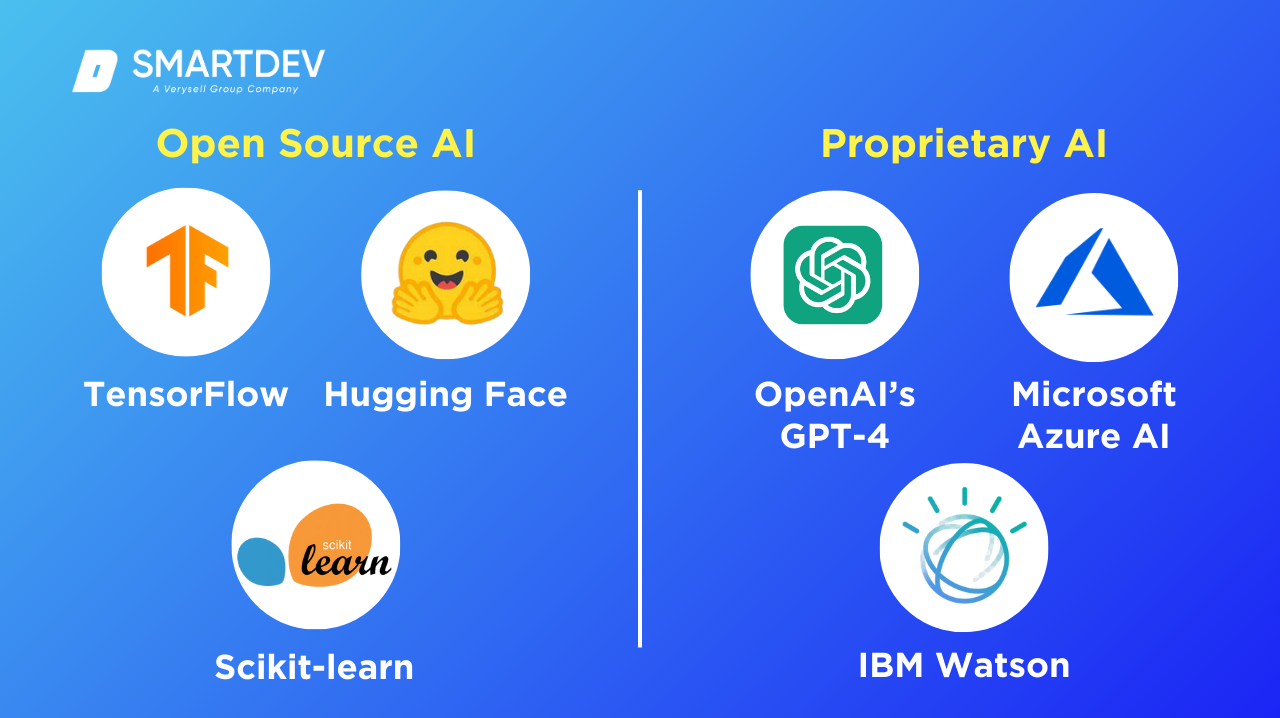
For years, artificial intelligence lived behind closed doors. The most powerful models — the ones writing essays, generating images, and answering questions — were locked inside corporate APIs, metered by the token, and governed by terms of service most people never read. If you wanted cutting-edge AI, you rented it. Then, almost imperceptibly at first, the walls started to crack. In 2022 and 2023, a wave of freely available models began pouring onto the internet: Meta's LLaMA leaked and then officially opened, Stability AI gave away Stable Diffusion, and OpenAI — ironically — released Whisper under a fully permissive license. Suddenly, anyone with a laptop and an internet connection could download a genuinely capable AI model and run it themselves, for free, forever.
This wasn't just a technical curiosity; it was a philosophical shift in how powerful technology gets distributed. Open-source AI models put the same fundamental capabilities that power billion-dollar products into the hands of students, hobbyists, researchers, startups, and enterprises — without usage fees, without data collection, and without asking permission. A lawyer can analyze sensitive documents without them ever leaving her machine. A developer in a country with limited API access can build a chatbot anyway. A tinkerer can fine-tune a model on her grandmother's recipes just to see what happens. The gap between "the AI haves" and "the AI have-nots" hasn't disappeared, but it has narrowed in ways few predicted.
In this article, we'll take a thorough tour of the open-source AI landscape: what these models actually are, why the distinction between "open source" and "open weights" matters, the standout models you should know about, how to run them on your own hardware, and the honest challenges that come with going open. Whether you're a curious beginner or a developer weighing your options, by the end you'll understand why many believe the most important AI revolution isn't happening in Silicon Valley boardrooms — it's happening on ordinary computers around the world.
What Does "Open Source AI" Actually Mean?
Before diving in, we need to untangle some terminology, because the AI industry uses "open source" loosely — and often misleadingly.
True open source, in the traditional software sense, means you get everything: the code, the weights (the model's learned parameters), the training data, and the freedom to use, modify, and redistribute. Very few large AI models meet this bar. The Allen Institute for AI's OLMo is a rare example, releasing training data, code, and even training logs.
Open weights is what most "open source AI" actually is. You can download and run the model, and often fine-tune it, but the training data and full training pipeline remain secret. Meta's LLaMA models fall into this category — free to download, but governed by a custom license with conditions (for instance, companies over 700 million monthly users need a separate license).
Source-available / restricted licenses sit in a gray zone. Some models are free only for research or non-commercial use (like Cohere's Command R under CC-BY-NC), while others carry usage restrictions. Google's Gemma models are free for most purposes but come with their own terms.
Finally, there are the gold-standard permissive licenses: Apache 2.0 and MIT. Models like Mistral 7B, Qwen, DeepSeek-R1, and Phi-4 (under MIT) are about as free as software gets — use them commercially, modify them, ship them in products, no strings beyond attribution.
Why does this matter? Because "free to download" and "free to build a business on" are very different things. If you're just experimenting, almost everything is fair game. If you're building a product, read the license first.
Why Open Models Matter: The Case for Going Free
1. Privacy and Data Control
When you use a commercial API, your data leaves your machine and travels to someone else's servers. With a local open model, nothing leaves your computer. This is transformative for:
- Healthcare and legal work, where confidentiality is legally mandated
- Personal projects involving sensitive information
- Organizations bound by GDPR, HIPAA, or similar regulations
- Anyone who simply doesn't want their prompts logged on a server in another country
2. Cost Predictability
API pricing seems cheap until it isn't. A hobby project that suddenly goes viral can generate a bill measured in hundreds or thousands of dollars. A local model costs exactly $0 per token, forever. For high-volume workloads — summarizing thousands of documents, powering a chatbot — running an open model on your own hardware often beats API costs within months.
3. Customization and Control
Open models can be fine-tuned — retrained on your own data to specialize in your domain. A general model becomes a medical coding assistant, a legal contract analyzer, or a customer support agent that speaks in your brand's voice. You can also control the system prompt, safety guardrails, and output behavior at a depth that closed APIs rarely allow.
4. No Vendor Lock-In, No Discontinuation
Commercial models get deprecated. Pricing changes overnight. Companies pivot. If you build on an open model, nobody can take it away from you. The version you downloaded keeps working even if the company that made it disappears.
5. Offline and Edge Deployment
Open models run on devices with no internet connection: ships at sea, rural clinics, military applications, air-gapped secure environments, or simply your laptop on a plane.
6. Transparency and Research
Researchers can inspect open models, study their biases, audit their failures, and build on them scientifically. Closed models are black boxes; open ones are (partially) open books.
The Landscape: Key Models Worth Knowing
The open AI ecosystem moves fast — what's state-of-the-art this quarter is table stakes the next. But certain models have defined the field. Here's a map of the territory (with the caveat that newer releases have likely arrived since this was written).
Large Language Models (LLMs)
| Model | Creator | Notes |
|---|---|---|
| LLaMA 3.x | Meta | The model that ignited the open AI movement. Ranges from small (1B–8B) to massive (70B, 405B). Open weights with a community license. |
| Mistral / Mixtral | Mistral AI | French lab whose Mistral 7B proved small models could punch far above their weight. Mixtral popularized Mixture-of-Experts efficiency. Apache 2.0. |
| Qwen 2.5 | Alibaba | Consistently top-tier across benchmarks, excellent multilingual support, generous licensing. |
| DeepSeek-R1 | DeepSeek | The reasoning model that stunned the industry in early 2025 — GPT-class reasoning, MIT license, trained at a fraction of typical cost. |
| Phi-3 / Phi-4 | Microsoft | "Small but mighty" — tiny models trained on curated, textbook-quality data that rival much larger ones. MIT licensed. |
| Gemma 2 | Google's open offering, distilled from the technology behind Gemini. | |
| OLMo | Allen Institute for AI | The gold standard for true openness — data, code, and weights all public. |
Image Generation
- Stable Diffusion (SD 1.5, SDXL, SD3) — The model that put AI art in everyone's hands. Its 1.5 version spawned an enormous ecosystem of community fine-tunes, LoRAs, and tools like Automatic1111 and ComfyUI.
- FLUX.1 — From Black Forest Labs (founded by Stable Diffusion's original creators). The "schnell" variant is Apache 2.0 and produces remarkably photorealistic images with accurate text rendering.
Audio and Speech
- Whisper (OpenAI) — Speech-to-text so good and so free (MIT license) that it quietly became the transcription backbone of the internet.
- Piper and Coqui TTS / XTTS — High-quality text-to-speech that runs locally.
- MusicGen (Meta) — Generate music from text descriptions.
The Hub That Ties It Together
Hugging Face deserves special mention. It's the "GitHub of AI" — a platform hosting hundreds of thousands of models, datasets, and demos. If you're entering this world, Hugging Face is your front door.
Running Open Models Yourself: Easier Than You Think
The barrier to entry has collapsed. Five years ago, running a language model required a GPU cluster and a PhD in suffering through dependency conflicts. Today:
The Easy Routes
- Ollama — Install it, type
ollama run llama3.2, and you're chatting with a local model in minutes. Works on Mac, Windows, and Linux. - LM Studio — A polished graphical app for browsing, downloading, and chatting with models. Perfect for non-developers.
- GPT4All — Beginner-friendly desktop app with a model finder built in.
Hardware Reality Check
Thanks to quantization (compressing models to 4-bit precision with minimal quality loss), the requirements are surprisingly modest:
- 7B–8B models: Run well on 8–16GB of RAM. Modern laptops handle these fine.
- 13B–14B models: Comfortable with 16GB RAM and a decent GPU.
- 30B–70B models: Need serious hardware — 24GB+ VRAM (RTX 3090/4090) or Apple Silicon with unified memory.
- Giant models (400B+): Realistically run via cloud providers serving open weights, or heavily quantized on workstation-class machines.
The sweet spot for most people today is the 7B–14B range: fast, capable, and laptop-friendly.
For Developers
If you want to build rather than just chat: llama.cpp (the C++ engine underpinning most local AI), Hugging Face Transformers (the Python standard), vLLM (high-performance serving), and LoRA/QLoRA techniques for affordable fine-tuning.
Real-World Use Cases
Open models aren't just for tinkering. They're quietly powering:
- Privacy-first note apps and assistants (Obsidian plugins, local-first software)
- Enterprise document analysis where data can't leave the building
- Coding assistants running locally (Continue.dev, Aider paired with open models)
- Translation and transcription tools in low-connectivity regions
- Academic research into AI safety, bias, and interpretability — impossible on closed models
- Embedded and edge AI — models running on phones, robots, and IoT devices
- Creative pipelines — custom image models fine-tuned on an artist's style
- Startups that need AI capabilities without burning venture capital on API bills
The Honest Challenges
A balanced article owes you the caveats:
The quality gap (usually) still exists. The best closed models — the frontier frontier — generally outperform open ones on the hardest reasoning and creative tasks. That gap has narrowed dramatically (DeepSeek-R1 proved open models can reach frontier reasoning), but "the best AI in the world is free" isn't quite true yet. Emphasis on yet.
Hardware isn't free. The model costs nothing; the GPU might cost $1,600. For casual users, small models solve this. For serious workloads, the math requires actual analysis.
You become the operations team. No one is responsible for your uptime, security patches, or model updates but you. Commercial APIs handle scaling, redundancy, and abuse prevention; with local models, that's your job.
Safety and misuse. Open models can be stripped of guardrails and used for harmful purposes. This is the industry's most genuine dilemma: the same openness that enables research and privacy also enables abuse. The debate over how to balance this is unresolved and important.
License landmines. As covered earlier, "open" ranges from MIT to "free unless you're too successful." Read before you build.
Where This Is All Heading
Three trends seem likely to define the next few years:
-
The gap keeps closing. Each generation of open models arrives closer to the closed frontier, sometimes within months. DeepSeek's efficient training methods suggested that world-class results may cost far less than assumed.
-
On-device AI becomes default. Phone makers, laptop manufacturers, and OS developers are racing to run capable models locally. Your next device probably ships with an open model inside.
-
The ecosystem professionalizes. What began as hobbyist GitHub repos is becoming infrastructure: managed hosting for open models, enterprise support contracts, and compliance tooling — "open source with a business model," much like Linux before it.
The historical parallel is hard to ignore. In the 1990s, proprietary Unix seemed unbeatable; Linux was a toy for enthusiasts. Today, Linux runs most of the internet, every Android phone, and the world's supercomputers. Open AI is on a similar trajectory — dismissed by incumbents, embraced by builders, and steadily becoming the substrate everyone depends on.
Conclusion: Your Move
Free, open AI models have done something remarkable: they've transformed artificial intelligence from a service you rent into a tool you own. The capabilities that once required a corporate budget are now a download away — private, customizable, costless to run, and answerable to no one but you.
You don't need to be a machine learning engineer to start. Install Ollama or LM Studio, pull down a small model like LLaMA 3.2 or Phi-4, and have a conversation with an AI that lives entirely on your own machine. It's a small act, but it's also a preview of a different technological future — one where the most powerful tools of our era are held in common rather than leased back to us.
The revolution, as it turns out, is free. The only question is whether you'll download it.
Want me to adjust this article? I can make it shorter for a blog post, more technical for a developer audience, add SEO optimization, expand any section (like the "how to get started" tutorial), or reframe it around a specific niche like business use cases or privacy.
Leave a Reply
Your email address will not be published. Required fields are marked *